





Established 1971
Hits Harder In
20 New Markets
Fairtex is the Thai combat sports house behind some of the best known names in Muay Thai. Working with Glopal, it took its European store from English only to 20 language versions in six weeks, right through holiday peak, and saw new markets open within the first month.
20 Language versions live |
6 Weeks to live, during peak |
#1 Germany, now top in Europe |
0 Language hires to run ads |
The opportunity
The audience was there, the language was not
Fairtex began in 1971 as a textile manufacturer. Its founder, Phillip Wong, grew up with Muay Thai, started making his own equipment when outsourcing it fell short, and went on to open a training facility in Pattaya. Sponsoring ONE Championship took the brand onto the global stage. Today Fairtex covers Muay Thai, MMA, jiu-jitsu and kickboxing, still makes every product in its own factories in Thailand, and has just marked its 55th year.
For most of that history, online came last. Sales ran through distributors, and the website sat at the bottom of the list. As buying habits shifted during the COVID years, Fairtex moved from Magento to Shopify, rebuilt the store around how shoppers actually browse, and ran one global site in English and one for Thailand, later adding a third store for Europe.
English only took the brand so far. The team knew it was losing shoppers wherever English is not the everyday language, and the fixes on hand did not hold up. Language apps and Shopify plugins left copy mistranslated or not translated at all, and a separate Japanese site could not be kept up at the same pace as the others. The demand was visible. The store just could not speak to it.
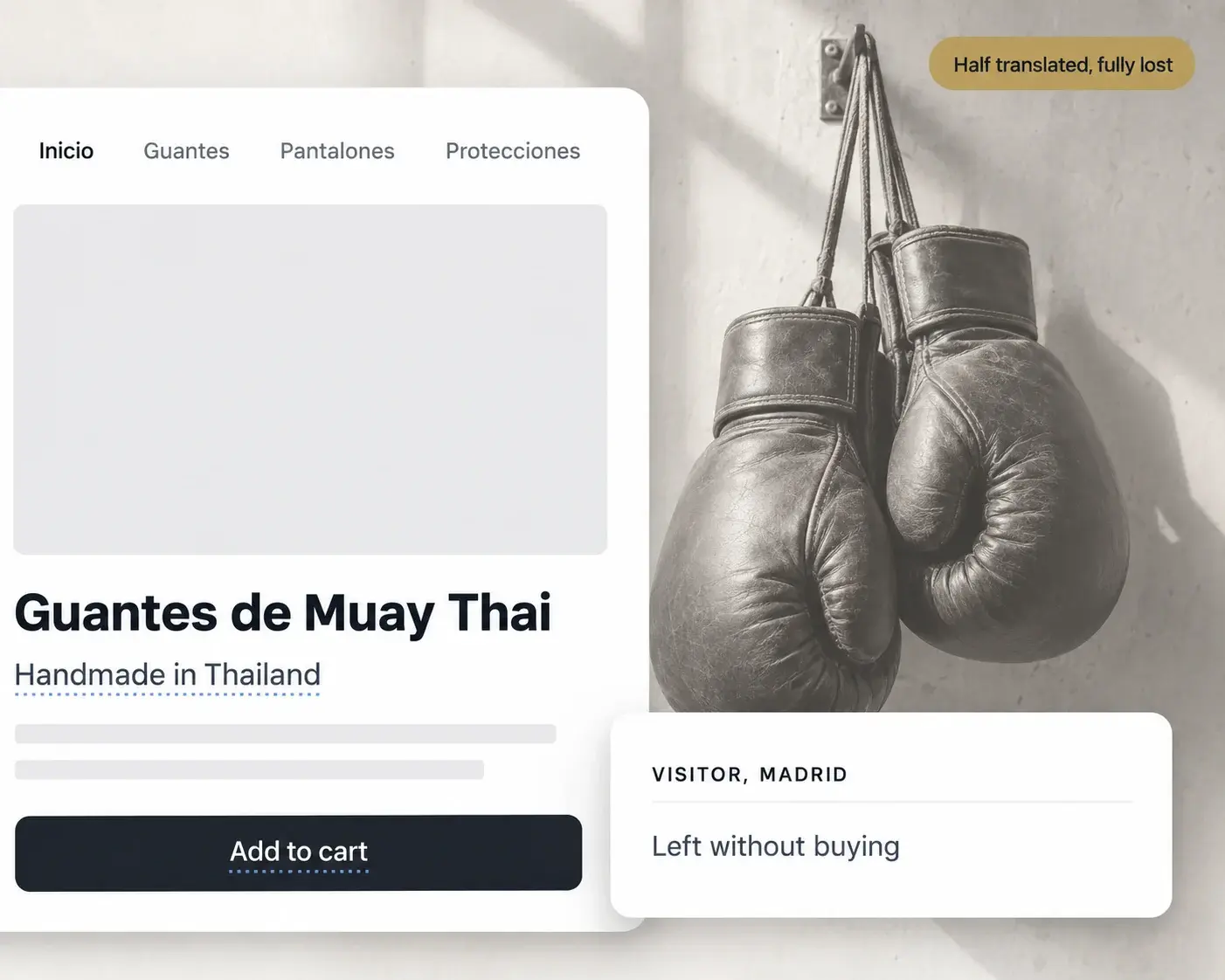
Half a translation loses the shopper just as surely as none.
Challenges
Six things in the way
| ||
| ||
| ||
| ||
| ||
|
What we put in place
Everything translated, down to the blog
Glopal now runs the European store in 20 language versions, and not only the product pages. Titles, product descriptions, navigation, blog posts and Google Ads all reach the shopper in their own language, so a customer in Spain or Poland meets Fairtex in Spanish or Polish from the ad onwards. The team sets the rules: terms that must never be translated stay untouched, terms that read differently in a market are adapted for it, and every language version stays in sync.
Operations did not change. Orders still run through the existing Shopify store, and the European warehouse in the Netherlands processes them exactly as before, with the same Dutch team. Ads no longer need a speaker per market either. Campaigns and the Google Shopping feed are translated in the back end, so marketing spend goes where the demand is rather than where the team happens to have a linguist.
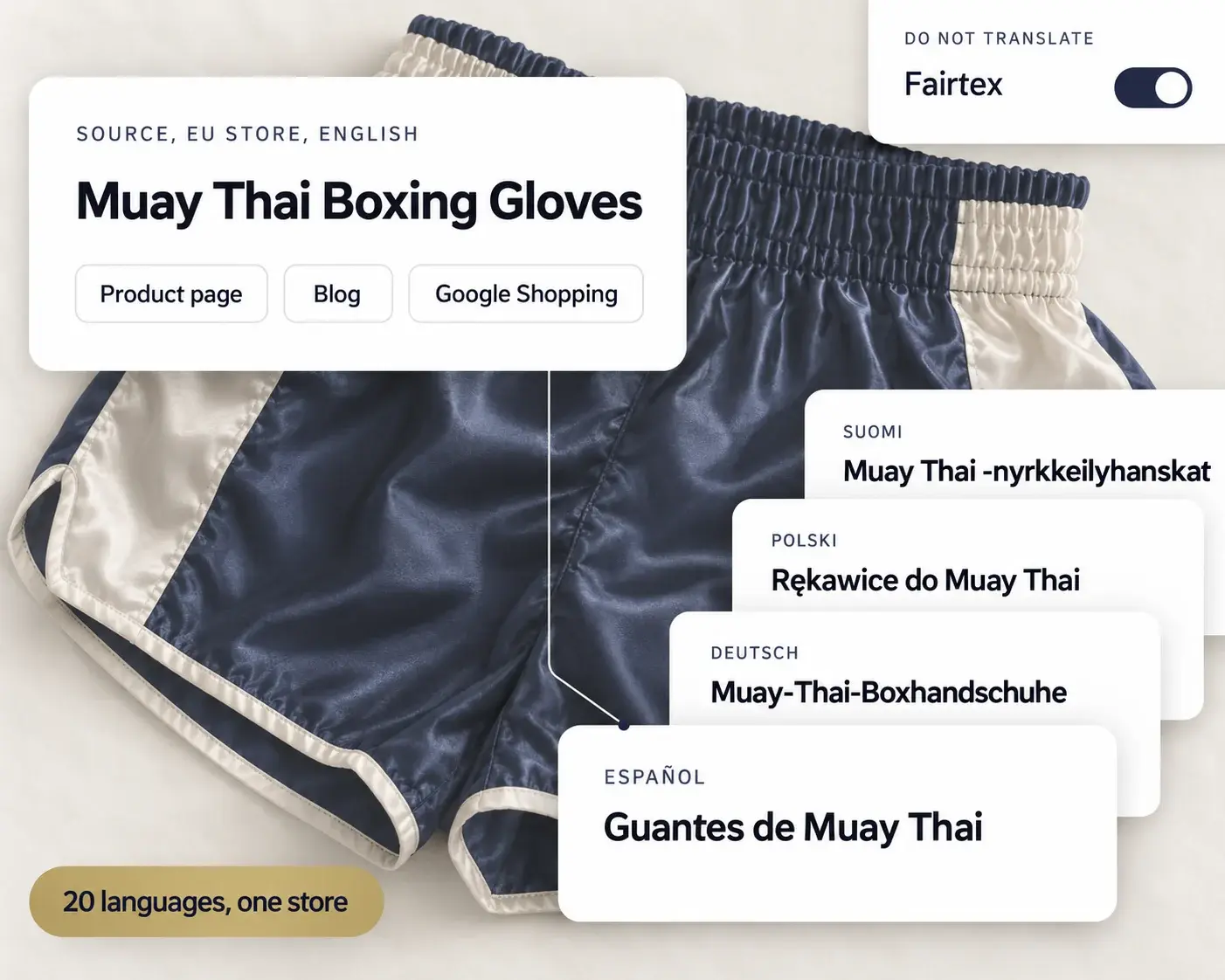
One store, every surface in 20 languages, with the team’s own rules held everywhere.
The timeline
Six weeks, straight through peak
1 Introduced Fairtex raised the problem of reaching non-English shoppers. Glopal showed it could cover the site, the blogs and Google Ads. |
2 Holiday peak, build Glopal laid out every step in one plan. The team worked through it while trading at peak. |
3 Six weeks, live 20 language versions live on the European store. |
+ Next Expansion across Europe, then warehouses in the US and South America. |
Results
A new country every day
At the time of the webinar Fairtex had been live for just over a month, early days for a channel where organic usually takes time to warm up. The signs were already there. Spain, a large market that had always been hard to reach, picked up, and so did Poland, a market the team had been told existed but never managed to open. Germany overtook France as the top market in Europe, abandoned carts fell, and in France growth jumped once shoppers no longer had to hunt for the language switcher.
The surprises matter as much as the leaders. New customers turn up from a new country most days, from Finland to North Macedonia, and South Korea is sending far more visitors than early search research suggested. Customer service chats now arrive in Eastern European languages. Traffic from South America is strong enough that shipping, not demand, is the constraint, which is why warehouses there and in the US are next. None of it took a new marketing plan, only speaking to shoppers in their own language.
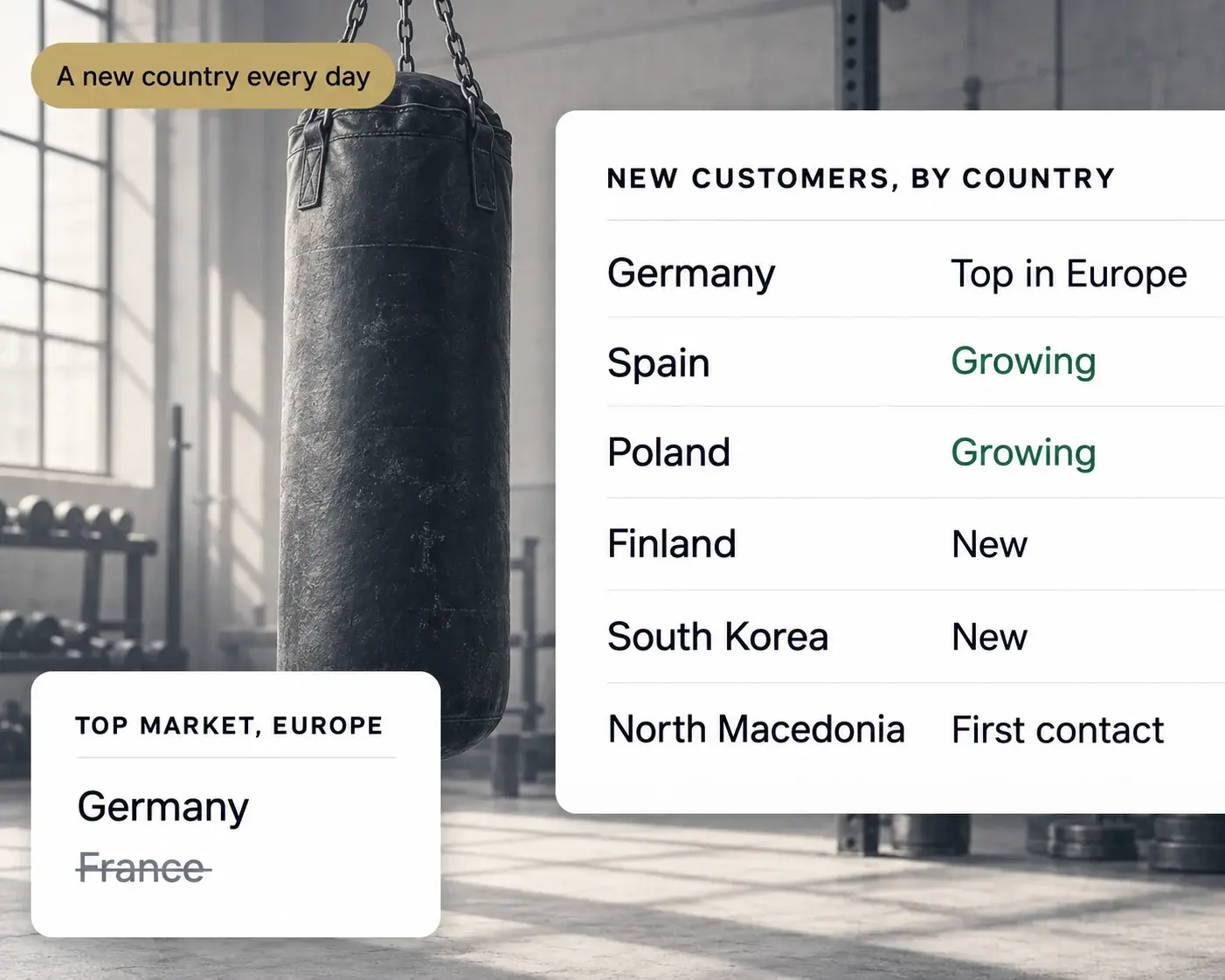
Speak the language, and the markets nominate themselves.
“We tried every strategy, but it was literally just the translation that needed to be done in order for them to come to the site.” Rikki Chan, Head of E-commerce, Fairtex |

Are you ready
to go global?
Book a product demo today to explore our suite of cross-border tools and to learn more about how Glopal can grow your international sales.